Comex Tech 2026: female leadership and the battle for Santos
Comex Tech Forum 2026 brought thousands of professionals together in São Paulo, highlighted the role of CEO Diana Santana and put AI, the Port of Santos and logistics costs at the center of the agenda.

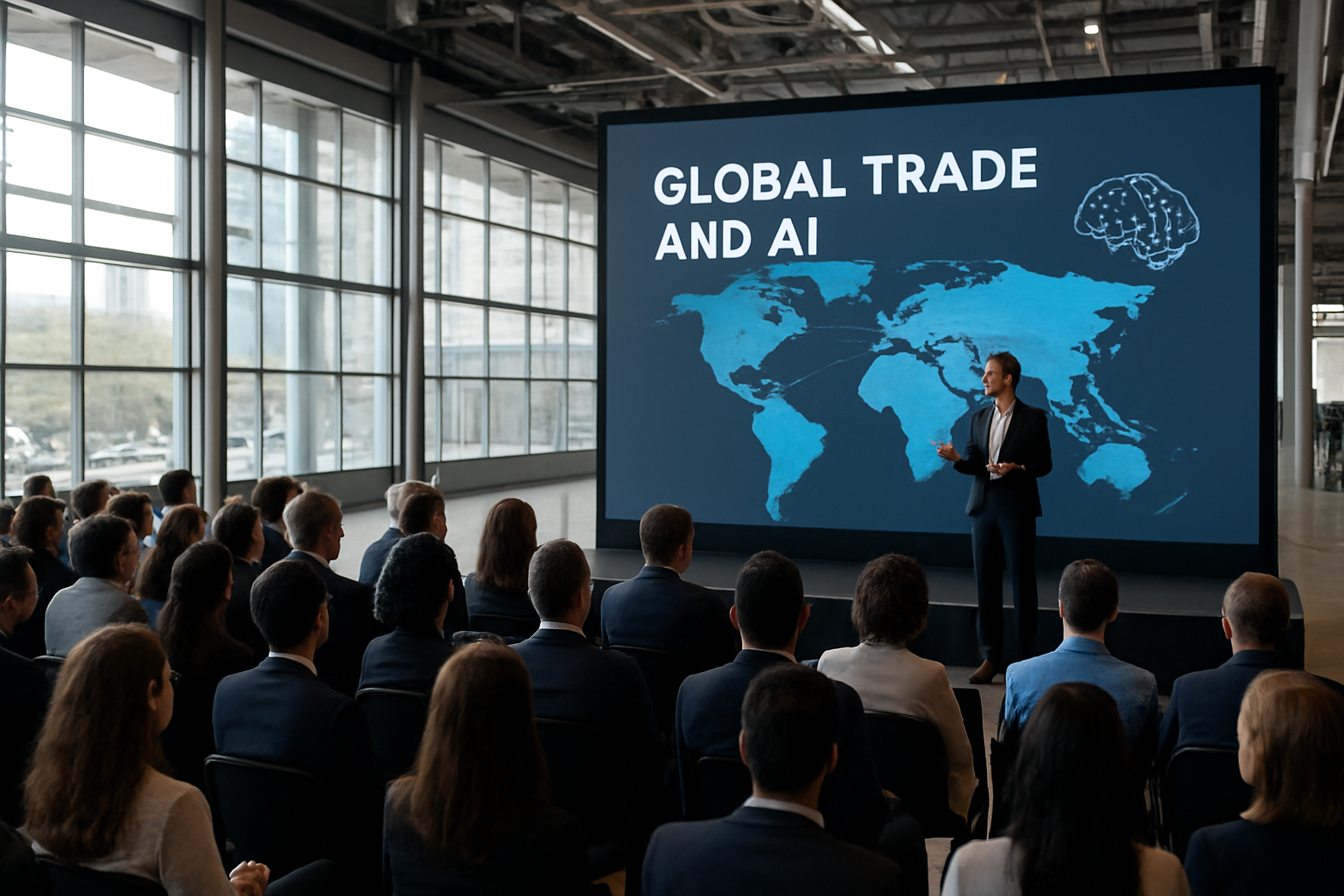
On September 2, 2026, Comex Tech Forum reached its 4th edition at the Transamérica Expo Center in São Paulo, bringing together thousands of foreign trade, logistics and technology professionals for a single day of intense debates on AI, supply chain and risk management, according to the event’s official data[1] and media coverage[3].
Among the participants, the presence of CEO Diana Santana, from SEA-AIR Cargo, stood out in the specialized press, which reported her participation as a reinforcement of female leadership in the sector and of SEA-AIR’s role as a sponsor of the forum[2]. For importers and exporters, the practical takeaway from the event has less to do with announcements of new rules and more with three pillars: adoption of AI in operations, competition for capacity at the Port of Santos, and the strengthening of decision-making networks – where female leadership carries real weight at the table.
What Comex Tech Forum 2026 was and where CEO Diana Santana fits in
Comex Tech Forum 2026 was held on September 2, 2026, at the Transamérica Expo Center in São Paulo, in the 4th edition of the event organized by Logcomex[1]. According to the official event material, there were around 3,500 visitors, representing 2,300 companies, with a reported metric of R$ 1.9 million in deals generated at the fair, more than 1,300 qualified leads per exhibitor and the presence of companies that together move about US$ 9 billion per year[1].
CNN Brasil reported “around 4,000 participants and more than 30 speakers” at the 2026 edition, highlighting that the forum discussed artificial intelligence, logistics, geopolitics, risk management, export, finance and leadership[3]. The difference between 3,500 and ~4,000 participants comes from different sources (official site and press), but both point to a large-scale event, with dozens of exhibitors and speakers.
In terms of sector leadership, an article on the portal EgoBrazil recorded that “businesswoman Diana Santana, CEO of SEA-AIR Cargo, took part last Wednesday (2) in Comex Tech Fórum 2026”, in content published on September 3, 2026[2]. The same article notes that SEA-AIR was a sponsor of the event, and a post by the company itself on LinkedIn mentioned a meeting between the CEO and Helmuth H., CEO of Logcomex[2].
According to coverage by CNN Brasil, the forum brought to the stage topics directly connected to the daily life of importers and exporters: use of AI to increase predictability in routes and costs, impacts of geopolitical crises on freight and insurance, as well as leadership and data culture in supply chain and foreign trade areas[3]. The Port of Santos and the mega-auction of Tecon Santos 10 were also on the agenda, with mention of the decision by CADE’s General Superintendence, in August 2026, approving without restrictions a corporate transaction between Maersk and MSC at the BTP terminal, paving the way for joint participation in the Tecon Santos 10 auction[4].
Practical impact: what changes (and what does not) in operations
From the perspective of those responsible for import, export, purchasing or distribution, the effects of Comex Tech Forum 2026 come in three layers: technology (AI and data), infrastructure (Port of Santos) and commercial relations (networking and leadership).
1. Technology and AI: predictability, not new rules
CNN Brasil’s coverage shows that the central technology topic was the use of AI to deal with uncertainty: freight scenarios affected by conflicts in the Middle East, tariff changes and supply shocks[3]. The focus is on predictability of routes, costs and risks, with visibility solutions, document automation and near-real-time monitoring.
In practice, this affects:
- Total cost calculation: using tools that cross-reference the history of freight rates, congestion, route deviations and transit time helps simulate logistics cost scenarios, but does not change the contractual foundations with carriers and forwarders. Quotes remain market-based, case by case.
- Lead time management: AI and data can improve the quality of ETA forecasts, but they do not change the physical transit or berthing time overnight. It is a planning resource, not a cargo “teleport”.
- Back office in foreign trade: automation solutions can reduce rework in documents, but no official act identifiable in the sources indicates a change in legal requirements or mandatory documents arising from the forum.
Important: in the sources reviewed there is no communication from Receita Federal, the MDIC or any other regulatory body announcing immediate changes in clearance processes, licensing or types of documents due to Comex Tech Forum 2026. In other words, the formal customs routine remains the same; what changes is the pressure for digitalization and more intensive use of data.
2. Port of Santos and Tecon Santos 10: future capacity, not immediate relief
The debate on the Port of Santos revolved around the mega-auction of Tecon Santos 10 and the corporate reorganization involving Maersk and MSC at BTP. In August 2026, CADE’s General Superintendence approved, without restrictions, a transaction that adjusts joint control of BTP and makes it possible for the two giants to compete for Tecon Santos 10[4].
For importers and exporters, the practical implications are:
- Short term: there is no data in the sources showing immediate reduction in queues, berthing time or port tariffs directly linked to the CADE decision or to the forum discussions. Today’s port operations continue under the same physical structures and contracts in force.
- Medium and long term: if Tecon Santos 10 is auctioned and actually developed, the trend is an increase in container handling capacity at Santos, the largest port in Latin America. Over the years, this may ease bottlenecks, shorten waiting windows and influence the pricing dynamics of terminals and services – but it will depend on the auction outcome, concrete investments and the port’s expansion policy[4].
For today’s planning, this means monitoring the auction schedule and future construction announcements, but not counting on a “capacity miracle” in 2026.
3. Freight, costs and contracts: volatility remains
CNN reports that recent geopolitical crises are putting pressure on ocean freight prices, but the forum did not produce any official rate table or new freight regime[3]. Prices continue to be set by carriers, the spot market and long-term contracts, and are sensitive to factors such as regional conflict, bunker costs, vessel capacity and the supply–demand balance.
This implies:
- Zero automatic price change via event: no source indicates that Comex Tech Forum redefined freight charging parameters or created a new tariff rule for the industry.
- Greater pressure for scenario analysis: AI and data platforms are gaining ground to simulate alternative routes, compare ports of loading/discharge and support decisions on annual or semi-annual contracts, including strategies to diversify routes and terminals.
4. Customs processes and documents: regulatory status quo
In the sources analyzed, there are no normative acts, guidelines from Receita Federal or government notices changing documentation, channeling or clearance flows as a result of Comex Tech Forum 2026. The forum is a space for debate, networking and technology showcases, not a regulatory body.
In day-to-day operations, this means:
- the same documents as always (DI/DUIMP, DU-E, licenses, certificates) under current regulations;
- the same compliance responsibilities, with or without AI;
- gains come from internal process efficiency, not from regulatory relief.
TMLOG’s reading
1. Interests behind the event and the leadership agenda
On the organizers’ and exhibitors’ side, the interest is clear and legitimate: to bring decision-makers closer to technology solutions and logistics services, in an environment where the official numbers of 3,500 visitors, 2,300 companies and R$ 1.9 million in deals generated[1] reinforce the forum’s role as a commercial showcase.
In the case of CEO Diana Santana’s participation, the move is twofold: to strengthen SEA-AIR’s image as a relevant player and, at the same time, to place female leadership at the center of the foreign trade leadership agenda, in line with the context of discussions on management and decision-making in the sector[2]. In an environment historically dominated by male executives, the presence of a logistics CEO sponsoring and taking up space at a forum of this scale has both symbolic and practical effects: it influences who speaks, who is heard and who sets investment priorities in technology and infrastructure.
2. What is hype and what is concrete
A portion of the press and corporate communication tends to sell AI as an instant solution to logistics chaos and freight volatility. The sources consulted do not show any data proving a direct reduction in costs or lead times due to AI showcased at the forum. What exists are tools that improve predictability and decision support[3]. This matters, but it does not replace freight negotiation, contractual risk management and route diversification.
Regarding the Port of Santos, headlines that link CADE’s decision to an “imminent revolution” in the port’s capacity also oversimplify the picture. Approval of the Maersk–MSC transaction at BTP opens the door to their competing for Tecon Santos 10[4], but there is no construction delivered, no operating terminal and no new tariff table yet. The change is structural and medium term.
3. What really changes for the client
What is already on the table for importers and exporters:
- Pressure to professionalize the use of data: meetings and panels like those at Comex Tech 2026 show that the competitive basis is shifting from “reading the market” to operating with forecasts, scenarios and digital KPIs. Those who stay stuck in static spreadsheets lose reaction time.
- Greater relevance of decision-making networks: events that bring together thousands of professionals and players who move US$ 9 billion a year[1] create environments where suppliers, terminals, carriers and major shippers align expectations. Not taking part does not change the rulebook, but it reduces the ability to influence contracts and seek alternatives.
- Diverse leadership: the visibility of a CEO like Diana Santana at a technology and logistics forum points to a sector where leadership diversity becomes a real asset – including to face crises, rethink routes and negotiate with global partners[2].
4. What to do in the coming weeks
- Map where AI makes sense in your operation: start with lead time predictability, shipment tracking and freight scenario simulations, always comparing forecasts with actual data and avoiding the “infallible black box” trap.
- Review your Santos strategy: closely follow news about the Tecon Santos 10 auction and moves by terminals and carriers linked to Maersk and MSC. Adjust contracts and routing plans considering possible capacity changes in the coming years.
- Strengthen foreign trade governance: bring purchasing, logistics, tax and finance to the same table, using consolidated data to negotiate freight and long-term contracts instead of isolated decisions in each area.
- Encourage internal leadership: open space for diverse leadership – including women in decision-making roles – not as a speech, but with real mandate over budget, choice of logistics partners and technology adoption.
Practical warning: a common mistake is assuming that because a provider showcased its solution at a major foreign trade forum, it is already “validated” and integrated with Receita, ports and carriers. The Comex Tech 2026 sources do not show any automatic regulatory seal or official government approval of systems. Before tying your critical operation to any platform, validate:
- actual connections with the ports, terminals, carriers and banks you use;
- compliance with Receita Federal and consenting bodies’ requirements, based on current regulations;
- a contingency model in case the system fails at shipment, licensing or FX closing time.
A strong event does not equal guaranteed integration: test, compare and negotiate.
Sources
International trade and logistics specialist with experience in import, export, customs clearance and international business development at TMLOG Global Trade & Logistics.
LinkedIn