China and the US resume consultations: what changes for your trade
Chinese vice premier will visit the US from 19 to 23 Sep 2026 for economic and trade consultations. Understand how possible tariff adjustments could affect Brazil–China–US supply chains.

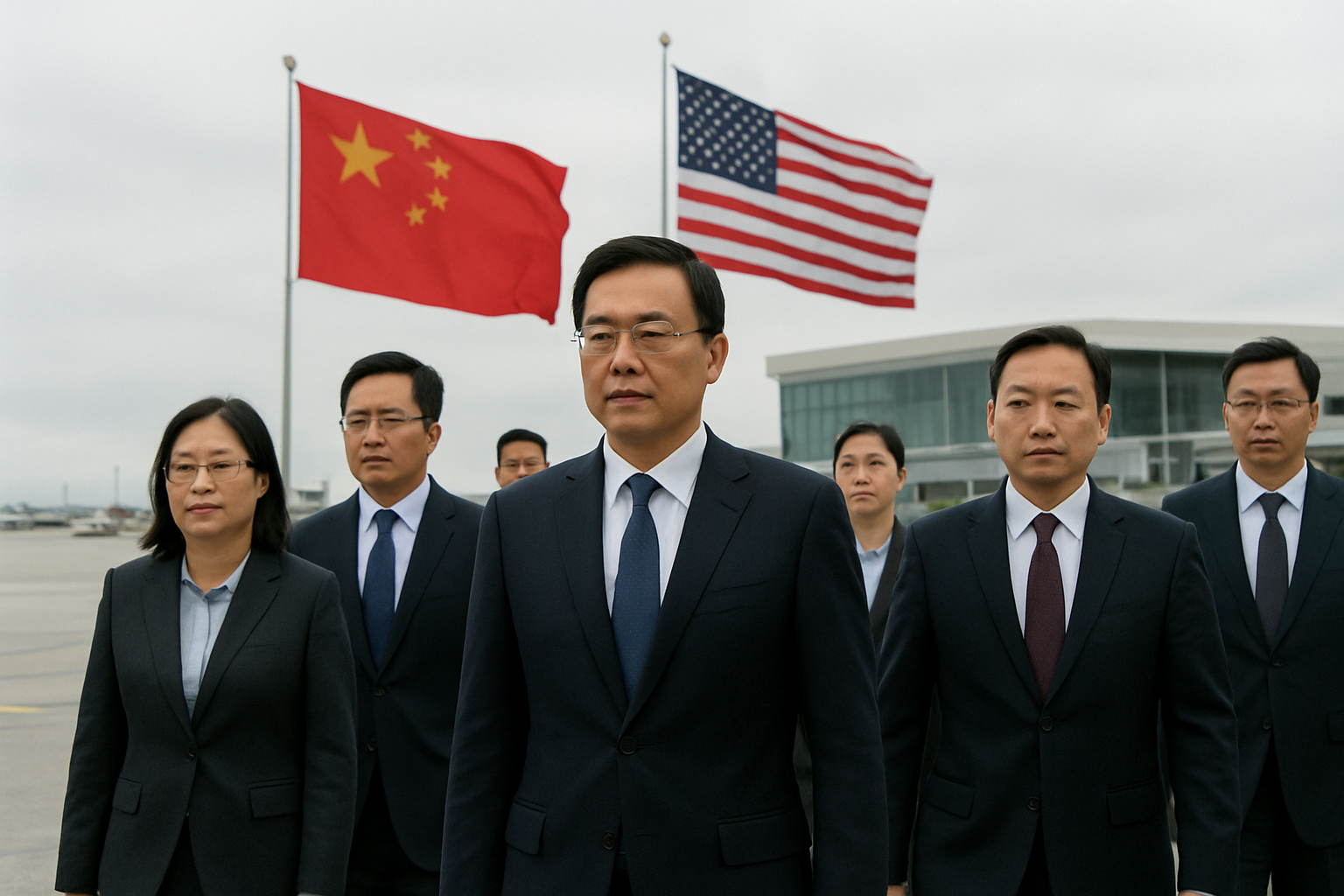
Between September 19 and 23, 2026, Chinese Vice Premier He Lifeng will lead a delegation to the United States for a round of bilateral economic and trade consultations in Washington, under the official dialogue mechanism between the two countries (MOFCOM).
These talks target tariff issues and economic security and could affect a trade flow of 2.76 trillion yuan between China and the US for January–August 2026 alone, a 1.3% year-on-year increase (Global Times). For parties importing Chinese inputs to sell in the US or relying on components that cross this route, any tariff adjustment, sanction or technical barrier can hit costs, lead times and contract viability directly.
Context of the visit and key figures
The Ministry of Commerce of China (MOFCOM) announced on September 19, 2026 that He Lifeng will visit the US between September 19 and 23, 2026 for economic and trade consultations, “guided by the important consensus reached by the heads of state” and focused on “issues of mutual interest” (MOFCOM).
According to Chinese coverage, these consultations continue a prior round held in May in South Korea, which, the Ministry of Commerce says, produced “positive results” on topics such as tariffs, non-tariff barriers and the promotion of agricultural trade (Global Times).
One of the most sensitive points under discussion is a proposed framework agreement for reciprocal tariff reductions, involving products worth around US$30 billion of trade on each side (China exporting to the US and the US exporting to China). This figure was cited by a MOFCOM spokesperson and reported by the Global Times. It is a negotiation reference target, not a final HS list nor defined tariff percentages.
The same reports indicate that technical teams are working on this “framework agreement,” i.e., a general architecture for tariff reduction to be detailed later in product lists and cut levels. So far, no sectoral lists or application dates have been released (Global Times).
In parallel, analysts cited in the Chinese press link the need for “greater stability” in economic relations to recent US measures on technology and sanctions: regulatory advisories on AI practices issued on September 8 and a law that expands the possibility of sanctions and broader-reaching secondary tariffs (Global Times). These points form the background to the consultations, with a focus on risk and predictability for bilateral trade.
In volume terms, China–US trade reached 2.76 trillion yuan in the accumulated January–August 2026 period, up 1.3% compared with the same period last year, according to Chinese customs data cited by the Global Times. This figure shows that, despite tensions and unilateral measures, the chains remain active and large in scale.
So far, no MOFCOM statement mentions immediate changes to import/export regimes, certifications, classifications or documentary requirements for third countries like Brazil. The formal focus is consultation and commercial policy negotiation, without announcement of immediate operational changes at customs (MOFCOM).
Practical impact for Brazilian companies
There are no changes in force to documents, customs processes or regimes for Brazil at Chinese ports and airports up to the end of this round (September 19–23, 2026). Neither MOFCOM nor the cited articles mention changes in forms, licenses, channels or additional certification requirements for Brazilian exporters (MOFCOM; Global Times).
The practical impact at this stage sits on three strategic fronts for those operating on the Brazil–China–US connection:
- Managing future tariffs: the US$30 billion reference in products per side for a possible framework agreement, if realized, could change the relative competitiveness of Chinese and American goods in specific segments (Global Times). For a Brazilian exporter that sells to China or the US and competes with those products, this may mean price pressure; for those integrated in the chain (components made in Brazil and assembled in China to sell in the US, for example), the effect can be the opposite: a segment of the chain could become cheaper in tariff terms, requiring repricing or contractual redesign.
- Route and counterparty risk: with the US expanding legal instruments for sanctions and secondary tariffs, mentioned in analyses linked to the visit (Global Times), any Brazilian company depending on routing via the US for cargo originating from or destined to China needs to map risks of blocking, heightened inspections or future additional costs. There is no new specific rule yet, but the regulatory appetite is clear in the debate.
- Mid-term contract planning: negotiations with a horizon of tariff reduction, even without details, change the dynamics of 12–24 month contracts involving factories in China producing for the American market or vice versa. For Brazilian importers who resell into these chains, the critical point is a price adjustment clause for tariff changes, so they do not shoulder alone the risk of a post-agreement shift.
In day-to-day operations, what is important to monitor now:
- Incoterms and tariff responsibility: in triangulated chains (Brazil–China–US), review who absorbs any increase or reduction in tariffs between China and the US, should the agreement advance or unilateral measures appear.
- Delivery times and inventory: since the round is short (September 19–23, 2026) and without measures announced immediately, there is no evidence of a change in lead time for regulatory reasons now (MOFCOM). But companies operating with minimal stock margins should have contingency plans in case new barriers emerge.
- Communication with overseas customers: customers in the US and China may use the uncertainty as an argument to renegotiate. Clarifying that, to date, rules for Brazil have not changed helps resist unjustified cost pass-throughs.
In summary: no new form, parametrization channel or specific license has been communicated for Brazil. The risk is not today's bureaucracy, but potential tariff changes and sanctions that could emerge from the other side of the table in the coming weeks or months if consultations advance.
TMLOG's take
Interest behind the move
The facts show two clear vectors. On one side, China seeks to reduce volatility and uncertainty in commercial relations with the US, preserving the 2.76 trillion yuan trade flow that is rising, albeit moderately (+1.3%) (Global Times). On the other, recent US measures on technology and expanded sanctions create a risk environment that pressures Beijing to negotiate protection and predictability mechanisms.
In practice, both want to keep trading, but with greater bargaining power: the US uses the threat of sanctions and technological restrictions; China leverages market weight and the promise of tariff openings in selected segments, as suggested by the US$30 billion-per-side target (Global Times).
What seems exaggerated
In the face of a high-level visit like this, parts of the international press tend to treat the event as a “turning point” or an “immediate threat” to global chains. Official Chinese sources, however, speak of “consultations” and continuity of the bilateral mechanism, without a timetable or details of concrete measures (MOFCOM). There is no announcement of a new tariff, new sanction or new customs requirement directly linked to this trip.
Another point that calls for caution is reading the US$30 billion figure as a “closed package.” What exists, according to coverage, is a reference target for a possible framework agreement under study, not a firm commitment or a defined list of goods (Global Times).
What really changes for the Brazilian client now
Operationally, nothing changes today: same documentation, same shipping and clearance processes and the same customs regimes for Brazil. There is no announcement of changes in letters of credit, certificates, fumigation, technical standards or other requirements that directly affect Brazilian exporters and importers (MOFCOM).
Strategically, however, the signal is strong: China and the US continue negotiating and using tariffs and sanctions as bargaining chips. For the Brazilian company, this means:
- do not lock long-term contracts ignoring the risk of tariffs between China and the US;
- assess exposure in products that directly compete with Chinese or American goods susceptible to tariff cuts;
- study alternative routes and partners in high-risk chains (technology, semiconductors, certain chemicals and capital goods appear in the debate, according to analyses of the US measures cited by the Global Times).
In the coming weeks, the most rational move is to follow official statements from China and the US (MOFCOM, USTR and customs) instead of reacting to headlines. When product lists and timelines appear, that will be the time to recalculate HS code by HS code, route by route, contract by contract.
Practical alert: a common mistake is to assume that any China–US negotiation automatically changes tariffs or compliance for Brazil. Official sources make clear that, so far, we are talking about consultations and a possible framework agreement under study, without changes to customs procedures or documentary requirements for third countries (MOFCOM; Global Times). Before reworking your entire logistics network or revising list prices, wait for the publication of concrete measures, check the official text and only then adjust contracts and routes.
Sources
International trade and logistics specialist with experience in import, export, customs clearance and international business development at TMLOG Global Trade & Logistics.
LinkedIn